The Fundamental Principle of Shaping Metal
At its core, Stamping Machining is a versatile and high-speed manufacturing process that shapes flat sheet metal into desired forms. The fundamental principle relies on the use of a press machine and a custom-designed tool and die set. The press delivers a powerful force, which drives the tool (punch) into the sheet metal blank, forcing it into the die cavity. This controlled deformation, achieved in a single stroke or a series of strokes, separates or forms the metal with exceptional precision and repeatability. This method is favored for its ability to produce large volumes of identical parts with minimal waste, making it a cornerstone of mass production in industries like automotive and aerospace.
The Essential Tooling: Dies and Punches
The heart of any Stamping Machining operation lies in its tooling—specifically, the die and punch set. These are precision-engineered components, typically made from hardened tool steel to withstand immense pressure and wear. The die contains a cavity that defines the final part's shape, while the punch is the male component that pushes the metal into the die. The design and craftsmanship of this tooling are critical, as they directly determine the part's accuracy, surface quality, and complexity. Modern tooling can be designed for single operations or as progressive dies that perform multiple Stamping Machining steps in sequence, dramatically increasing efficiency.
The First Step: Blanking and Piercing
The journey of a sheet metal part often begins with a blanking or piercing operation, which are both shearing processes. In blanking, a punch cuts the outer contour of a part from the larger metal coil or sheet. The removed piece, now called a "blank," becomes the workpiece for subsequent forming stages. Conversely, piercing is the process of creating holes or cutouts inside the part. The material removed in piercing is considered scrap, while the surrounding strip becomes the useful part. These initial cutting stages require precise clearance between the punch and die to ensure a clean cut and extend tool life.
The Forming Stages: Bending, Drawing, and Coining
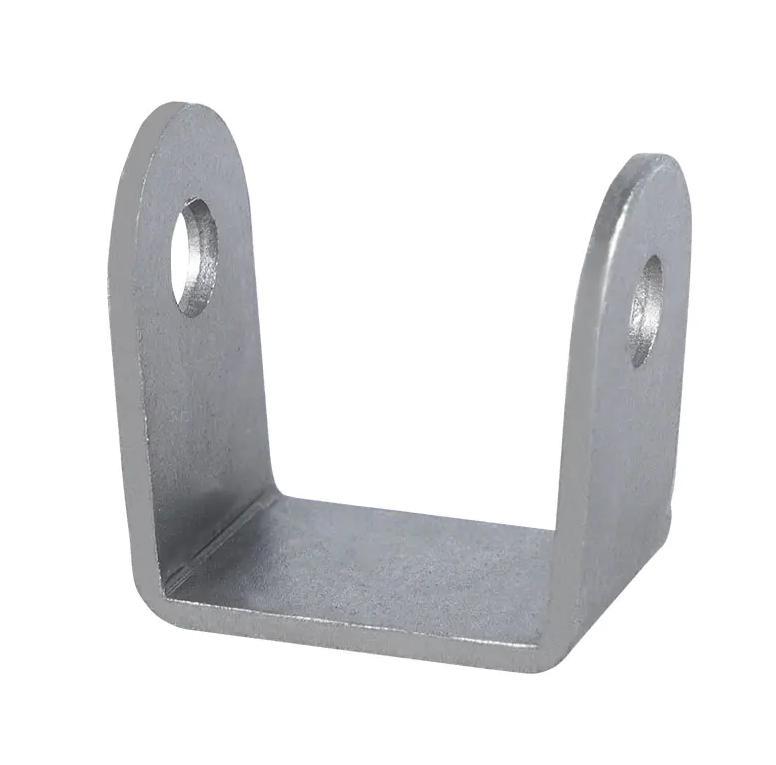
Once a blank is created, various forming operations give it a three-dimensional shape. Bending is exactly as it sounds—the metal is deformed along a straight axis to create a V-shape, U-shape, or other angles. Drawing is a more complex process where a blank is formed into a hollow or concave shape, like a kitchen sink or an automotive oil pan; this involves carefully stretching the metal into the die cavity without tearing. Another critical process is coining, which uses high tonnage to imprint a precise pattern or texture onto the metal's surface. Each of these Stamping Machining techniques applies force in a specific way to achieve the desired geometry.
The Complete System: Presses and Production Lines
The power required for these operations comes from industrial presses. These machines can be mechanical, hydraulic, or servo-driven, each offering different advantages in terms of speed, force, and control. In high-volume production, the process is often automated. A coil of sheet metal is fed directly into a press line, which may consist of several stations. A single stroke in a progressive die might simultaneously pierce holes in a part from two steps prior, bend a section from the previous step, and blank a new part, all in a continuous, synchronized motion. This high level of integration is what makes modern Stamping Machining so efficient for large-scale manufacturing.
Ensuring Quality and Precision in Every Part
The final outcome of the Stamping Machining process is not left to chance. Rigorous quality control measures are implemented throughout production. This includes regular inspection of raw material properties, monitoring press tonnage and alignment, and using coordinate measuring machines (CMMs) to verify the dimensional accuracy of finished parts. The combination of robust tooling, powerful machinery, and stringent quality checks ensures that every stamped component meets precise specifications, maintaining consistency across millions of parts and solidifying this process's role as a pillar of modern industrial manufacturing.

 Arabic
 French
 Spanish
 Portuguese
 Deutsch
 Turkish
 Dutch
Dutch
 Italiano
 Russian
 Romaian
 Portuguese (Brazil)
 Greek
Greek