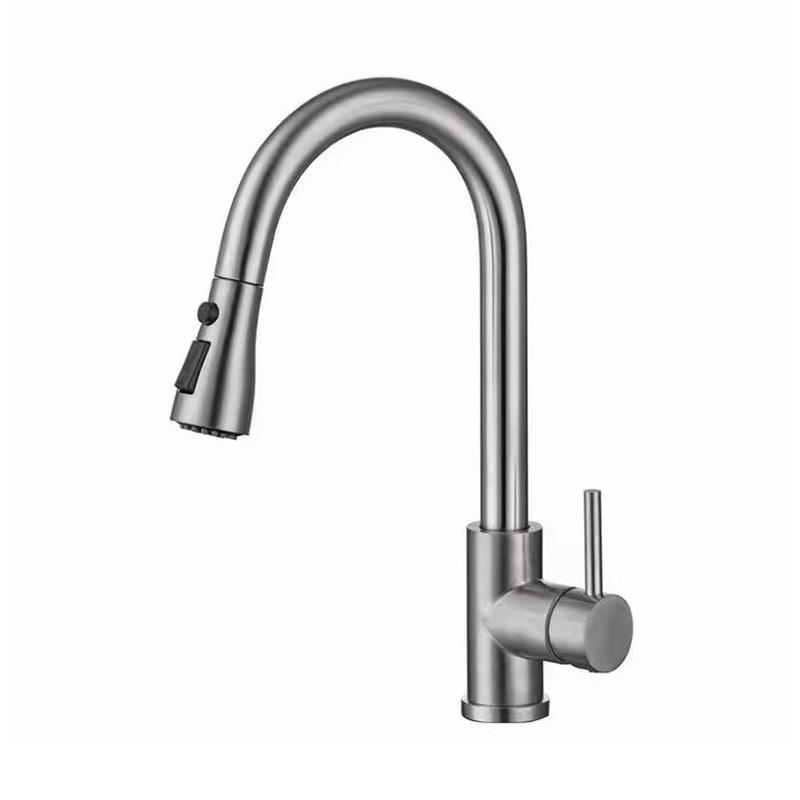
The world of bathroom faucet design offers a wide array of styles, configurations, and technological features to suit diverse aesthetic tastes and functional needs. One of the primary distinctions lies in the mounting style. A widespread bathroom faucet requires three holes in the sink or countertop—one for each handle and one for the spout. This classic configuration allows for flexibility in handle placement and often suits larger vanity tops. A centerset bathroom faucet combines the spout and handles on a single base that fits over a standard three-hole installation with the outer holes spaced four inches apart, presenting a unified look. For a minimalist appearance, a single-hole bathroom faucet houses both the control lever and the spout in one compact unit, requiring only one pre-drilled hole.
Beyond basic mounting, innovations have introduced new functionalities. The touchless bathroom faucet, activated by an infrared motion sensor, has become increasingly popular in both public and residential settings. This hands-free design enhances hygiene by eliminating the need to touch handles with dirty hands, conserves water by providing flow only when needed, and offers convenience, especially for families with young children. Another growing category is the waterfall bathroom faucet, which features a wide, open spout that allows water to cascade in a solid sheet rather than a traditional stream, creating a distinctive visual and auditory effect. For those seeking vintage charm, bridge faucets—where hot and cold handles are connected by a horizontal bridge piece to a central spout—recall early twentieth-century design.
Material and finish choices also significantly define a bathroom faucet's character. While durable chrome remains a staple, brushed nickel offers a warmer, contemporary look that hides fingerprints and water spots well. Oil-rubbed bronze and matte black finishes cater to rustic, industrial, or modern minimalist themes. Internally, the shift to ceramic disc valve technology has been a major advancement, providing reliable, drip-free operation with a simple quarter-turn handle movement. Some high-end bathroom faucet models also integrate water-saving flow restrictors or are designed to be compatible with under-sink water filtration systems. When selecting a bathroom faucet, homeowners must balance these style options, feature sets, and installation requirements with the existing decor and practical needs of their bathroom space, ensuring the chosen fixture is both beautiful and functional.

 English
 Arabic
 French
 Spanish
 Portuguese
 Deutsch
 Dutch
Dutch
 Italiano
 Russian
 Romaian
 Portuguese (Brazil)
 Greek
Greek